Belgium’s most urgent prison reform is not simply to build more cells. It is to reduce overcrowding safely, end the routine use of floor mattresses, move people with severe mental illness into appropriate care, and ensure that prisons have enough trained staff and rehabilitation services to support a lawful return to society.
The case for action is immediate. On 27 January 2026, Belgium held 13,470 people in prisons designed for 11,296 places; 545 people were sleeping on mattresses on the floor. That is not a marginal capacity issue—it is a system-wide failure affecting safety, healthcare, staff working conditions and the credibility of sentencing.
For readers following European justice policy from India or elsewhere, the central lesson is clear: prison reform works best when it combines targeted alternatives to custody with accountable sentencing, healthcare capacity and humane infrastructure. Adding prison capacity can help in the short term, but it cannot be the only answer.
The urgent reality: overcrowding is damaging every part of the system
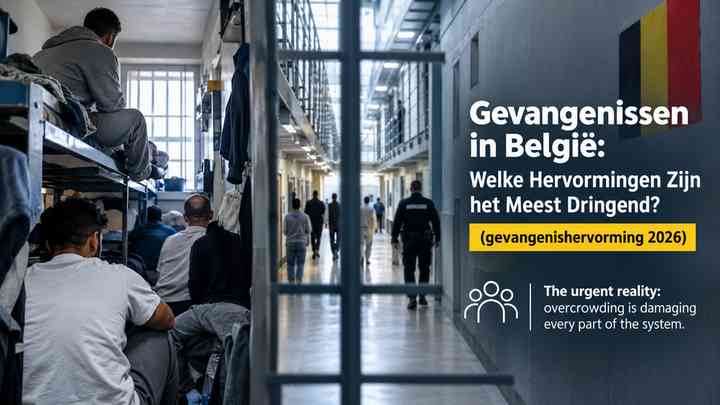
Belgium’s prison population has exceeded available capacity for years. The Council of Europe’s 2025 prison statistics recorded 114 prisoners for every 100 available places in Belgium, placing it among European systems facing severe overcrowding.
Overcrowding is not only about cramped cells. It reduces access to medical appointments, legal hearings, education, work and family contact. It also makes prisons harder to manage. The Council of Europe’s Committee for the Prevention of Torture (CPT), after its 2025 visit, reported growing pressure on healthcare and psychosocial services, violence concerns, and disrupted daily activities linked to staffing shortages.
A prison system cannot realistically prepare people for release when its staff are occupied with managing a daily capacity emergency. Therefore, the priority should be a reform programme that measures success by safer custody and lower reoffending—not by the number of occupied places.
1. End floor mattresses and reduce density through safe alternatives
The first reform priority is to stop forcing people to sleep on mattresses on the floor. This should be treated as an urgent standard of dignity and safety, with publicly reported progress for every prison.
Belgium has already introduced emergency measures. In July 2026, the Chamber adopted additional measures intended to relieve pressure, including wider electronic monitoring for eligible lower-risk groups and people in the final phase of their sentences. People convicted of terrorism, sexual offences, serious violent offences and drug-related crimes are excluded from this automatic electronic-monitoring measure.
These steps can help, but their quality matters as much as their scale. Electronic monitoring should not become an automatic substitute for support. A person released to the community may need stable housing, addiction care, employment support and regular supervision. Without these, a reduction in prison numbers may merely shift risk and hardship elsewhere.
A better approach would include:
- Clear eligibility rules based on current risk, not broad assumptions.
- Judicial oversight and individual case assessment.
- Community supervision teams with manageable caseloads.
- Housing and treatment referrals before release.
- Public data on outcomes, including recalls, reoffending and time spent awaiting sentence execution.
Short prison terms are particularly important. When a sentence is brief, imprisonment can disrupt work, housing and family life while offering little time for meaningful rehabilitation. For suitable cases, community sanctions, treatment orders, restorative programmes and electronic monitoring may be more proportionate and more useful than a short custodial sentence.
2. Reform pre-trial detention and speed up criminal proceedings
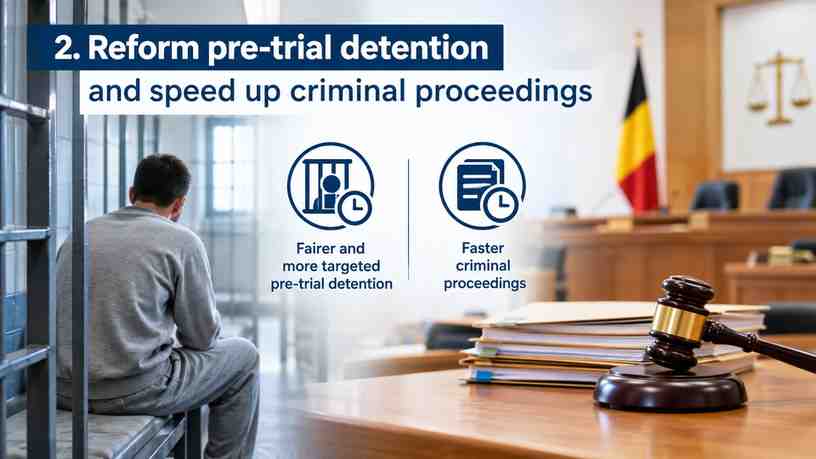
A second urgent reform is to reduce unnecessary pre-trial detention. People awaiting trial have not been convicted, yet they can occupy scarce prison places for long periods if cases move slowly or if alternatives are not properly considered.
Belgium’s overcrowding commission, established in August 2025, has identified pre-trial detention as one of its five core workstreams. That focus is essential. Courts should have access to credible, practical alternatives such as supervised release, reporting requirements, electronic monitoring and support services that address the reasons a person may fail to appear or reoffend.
The question should not be whether detention is ever necessary. In serious cases involving public-safety risks, witness interference or flight risk, it may be justified. The reform needed is a disciplined presumption that detention must be necessary, individualised and reviewed regularly.
Faster case handling is equally important. Delays can create a double problem: more people remain in custody before trial, while sentenced people wait for decisions about their sentence progression. Better court scheduling, digital case management, adequate legal-aid access and timely expert assessments can reduce pressure without weakening due process.
3. Remove people with severe mental illness from ordinary prison settings
The treatment of people with serious mental-health conditions is one of the clearest tests of a justice system’s humanity.
The CPT has again stated that people with severe mental disorders should not be kept in ordinary prisons. They should be transferred promptly to a civil psychiatric hospital or a specialised forensic psychiatric facility. This is not merely a healthcare preference. Prisons are generally not designed to deliver the intensity of clinical care, therapeutic continuity and specialist staffing that severe mental illness may require.
Belgium’s 2026 emergency measures include a change intended to prevent unnecessary returns of people subject to internment measures to prison. Under the new approach, a person in a care-oriented pathway should return to prison only where they present a serious danger to others; otherwise, the response should remain within a non-prison care setting.
That is directionally sound, but implementation will determine whether it succeeds. Belgium needs more appropriately staffed psychiatric and forensic care places, faster clinical assessments, and a reliable handover between justice and health authorities. A waiting list for treatment does not resolve the problem—it simply relocates it to a prison cell.
4. Put staffing, healthcare and daily regimes at the centre of reform
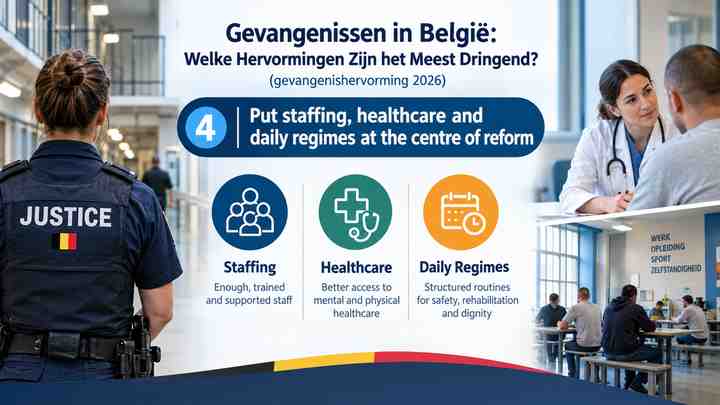
A prison building is only as safe and humane as the staff and services inside it. The CPT found that staffing shortages affected access to healthcare, court appearances and activities. It also noted that minimum service levels were often difficult to achieve, including outside strike periods.
This makes recruitment and retention a prison-reform issue, not just an employment issue. Officers need enough colleagues to manage conflict safely, engage with prisoners and facilitate daily activities. Healthcare staff need capacity to provide confidential, timely treatment. Psychologists, social workers, addiction specialists and educators need to be part of the operating model, rather than occasional add-ons.
Belgium’s updated Masterplan III includes more than 570 full-time-equivalent staff through recruitment or internal mobility. That is a meaningful commitment, but staff numbers should be matched to prison population, regime demands and healthcare needs—not treated as a one-off target.
A practical reform agenda should guarantee:
- Timely access to primary healthcare, psychiatry and addiction treatment.
- Protected time for education, work, sport and purposeful activity.
- Reliable access to legal consultations and court hearings.
- Training in de-escalation, mental health and trauma-informed practice.
- Staff wellbeing measures, including support after violence or critical incidents.
A safer working environment for staff and a more respectful daily regime for prisoners are not competing objectives. Each supports the other.
5. Make rehabilitation and release planning a core public-safety policy
The strongest argument for prison reform is public safety after release. Most people in prison will eventually return to the community. Whether they leave with a housing plan, healthcare link, identification documents, family contact and realistic employment prospects has direct consequences for reoffending.
Overcrowding undermines this work because it limits programmes and makes routine operations reactive. The CPT noted that staff shortages reduced both the quality and variety of activities, while also weakening preparation for reintegration.
Belgium should make individual release plans standard well before release, especially for people leaving after short sentences or electronic monitoring. Plans should address housing, income, healthcare, addiction treatment, education and employment. Local authorities and community organisations need predictable funding to provide this support.
Rehabilitation must also be evidence-led. Programmes should be evaluated on completion rates, employment outcomes, stable housing, victim safety and reoffending—not merely on how many people were enrolled.
6. Build and renovate prisons—but do not mistake capacity for reform
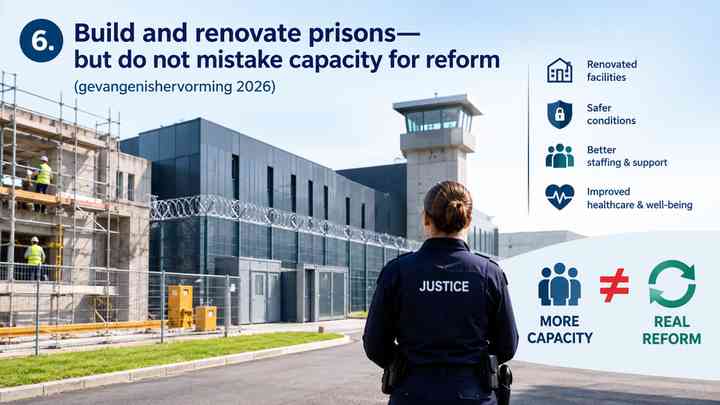
Belgium’s February 2026 infrastructure plan recognises the need for more humane conditions and updated facilities. It confirms projects in Antwerp, Mons, Verviers, Brussels and Hoogstraten. The planned new Mons prison is set at 300 places, while the Saint-Gilles facility is intended to remain open until no later than 2035, with capacity rising to 600 places from 2027.
Renovation and replacement of unsafe, outdated buildings are necessary. Decent ventilation, sanitation, healthcare spaces, visiting areas and activity rooms matter. So does separating people appropriately by legal status, vulnerability and security need.
However, new capacity should be linked to clear safeguards. If the number of people entering custody keeps rising, additional places can be absorbed quickly, leaving the underlying problem untouched. Belgium should publish an annual assessment showing whether new capacity has ended floor mattresses, improved access to services and reduced violence—not only whether occupancy has increased.
Infrastructure should support a smaller, better-functioning prison population, not make overcrowding easier to tolerate.
7. Strengthen independent oversight and transparent public reporting
Reform needs public accountability. Official prison statistics should be timely, consistent and detailed enough to show where pressures are most severe.
Useful reporting should include occupancy by institution, number of people sleeping on floor mattresses, pre-trial detention levels, staff vacancies, healthcare wait times, assaults, self-harm incidents, programme access and release outcomes. Data should be broken down carefully by age, gender, disability and legal status while protecting personal privacy.
Independent monitoring bodies must also have meaningful access to prisons, the ability to report concerns publicly and a formal mechanism for government responses. Oversight is not an obstacle to prison management; it helps identify risks before they become crises.
What should Belgium do first in 2026?
The most urgent sequence is straightforward:
- End floor-mattress detention through safe, individually assessed alternatives and urgent capacity management.
- Reduce unnecessary pre-trial detention and accelerate court processes.
- Transfer people with severe mental illness to proper healthcare settings without delay.
- Recruit and retain enough prison, healthcare and rehabilitation staff.
- Make release planning, housing and treatment continuity central to reducing reoffending.
- Use new infrastructure to improve conditions, while preventing capacity expansion from replacing deeper sentencing reform.
- Publish transparent results and allow independent scrutiny.
FAQ
What is the main problem facing Belgian prisons in 2026?
The immediate problem is chronic overcrowding. In January 2026, Belgium had 13,470 people in custody for 11,296 available places, with 545 people sleeping on floor mattresses.
Are new prisons the solution to Belgian overcrowding?
They can ease immediate pressure and replace outdated facilities, but they are not sufficient alone. Belgium also needs fewer unnecessary custodial placements, better pre-trial detention rules, community alternatives and stronger rehabilitation services.
What reforms are planned under gevangenishervorming 2026?
Current measures include expanded electronic monitoring for eligible cases, targeted early release for sentences of up to three years, changes related to people without valid residence status, and measures intended to reduce unnecessary returns of interned people to prison.
Why is mental-health reform urgent in Belgian prisons?
The CPT has warned that people with severe mental-health disorders should not be held in ordinary prisons. They need timely placement in civil psychiatric hospitals or specialised forensic psychiatric settings.
Can electronic monitoring reduce prison overcrowding safely?
Yes, for carefully selected lower-risk cases, especially when courts retain oversight and people receive housing, treatment and supervision support. Monitoring without support is less likely to produce durable results.
What would successful Belgian prison reform look like?
Success would mean no one sleeping on a floor mattress, safer conditions for staff and prisoners, timely healthcare and court access, fewer unnecessary remand placements, and stronger support that reduces reoffending after release.