Belgium is preparing for new outbreaks by combining continuous disease surveillance, expert-led risk assessment, coordinated crisis plans, hospital-capacity management and public alerts. The approach is designed not only for familiar winter illnesses such as flu, COVID-19 and RSV, but also for a possible “Pathogen X”, zoonotic infections, antimicrobial resistance and climate-linked health threats.
For Indian students, professionals and travellers in Belgium, the key takeaway is simple: Belgium has a structured response system, but official local guidance can change quickly during an outbreak. Following Belgian health authorities and keeping travel insurance, prescriptions and vaccination records organised remains important.
Why Belgium treats outbreak readiness as a long-term priority

COVID-19 showed that infectious-disease emergencies can strain laboratories, hospitals, supply chains and public communication at the same time. Belgium’s preparedness strategy now looks beyond a single virus. It considers seasonal respiratory pressure, new pathogens, diseases that pass between animals and humans, and environmental changes that can alter infection risks.
The Belgian National Risk Assessment for 2023–2026 examined 118 risks with input from 160 experts across more than 140 organisations. Health risks, including infectious diseases, form one part of this broader risk picture, which is also used to update emergency planning. Belgian National Risk Assessment
This matters because a new outbreak may not arrive in the same form as COVID-19. It could begin as an unusual cluster detected by a laboratory, a serious flu season, a mosquito-borne infection, or a disease imported through international travel.
The response chain: from early signal to government action
Belgium’s public-health response has clear roles, although it must coordinate across federal, regional and community-level authorities.
| Stage | Main role | What happens |
|---|---|---|
| Detection | Doctors, hospitals, laboratories and surveillance systems | Unusual cases and notifiable diseases are identified and reported. |
| Risk assessment | Risk Assessment Group (RAG) | Epidemiologists and specialists analyse scientific and epidemiological evidence. |
| Decision-making | Risk Management Group (RMG) | Authorities decide which health-protection measures are appropriate. |
| Crisis coordination | National Crisis Center, when needed | Cross-sector response, public communication and resource coordination can be strengthened. |
| Public guidance | Health authorities and local authorities | Residents receive recommendations, alerts and practical instructions. |
The RAG evaluates the risk to the population, while the RMG uses that advice to decide on protective measures. If the situation becomes severe and requires wider coordination, the National Crisis Center can be involved. Belgium’s infectious-disease response framework
This structure is important in a country where health responsibilities are shared. Effective response depends on timely information-sharing between federal and regional bodies, hospitals and local public-health agencies.
Respiratory surveillance: watching pressure before hospitals are overwhelmed

Respiratory illnesses remain one of the most predictable outbreak risks. Belgium uses its RespiRadar approach to follow two central signals:
- Circulation of respiratory pathogens
- Pressure on the healthcare system
Authorities can assign colour codes—green, yellow, orange or red—to describe the situation. Green and yellow indicate low or manageable pressure; orange signals growing strain; red indicates a high risk of overload. Belgium also recognises an “unknown” situation for an unpredictable new respiratory pathogen that is not already covered by routine monitoring.
The point is not merely to count infections. It is to act early enough to protect vulnerable people and keep essential healthcare functioning. Depending on the level and the disease involved, guidance can cover vaccination, staying home when ill, ventilation, masking in selected settings, protection of high-risk groups and workplace or healthcare measures.
Belgium’s winter respiratory plan is especially relevant because influenza, SARS-CoV-2, RSV and pneumococcal disease can create overlapping pressure during colder months. The authorities may adapt advice to the virus, severity and social setting rather than applying one fixed rule to every situation.
Better data: digital surveillance and outbreak detection
A major lesson from recent health emergencies is that delayed, fragmented data makes fast action harder. Belgium’s BE-SURVID programme, running from 2025 to 2029, aims to strengthen infectious-disease surveillance across general practitioners, clinical laboratories and hospitals.
The programme focuses on more automated data exchange and better links between datasets. It also includes work on early signal detection and predictive modelling. In practice, that can help authorities identify abnormal patterns sooner, investigate new variants or pathogens more efficiently and understand where healthcare pressure may build. BE-SURVID programme overview
This is a promising direction, but digital surveillance is not a magic switch. Reliable reporting, data quality, privacy safeguards, laboratory capacity and coordination across institutions still determine how useful the system is during a real emergency.
What happens if a serious new outbreak begins?

Belgium’s Generic Preparedness Plan provides a common framework for health authorities during major threats. Its practical logic has three broad phases:
- Prevent entry where possible: clinicians and hospitals must be ready to identify and manage suspected cases.
- Limit spread: public-health services can investigate cases, trace relevant contacts and apply proportionate control measures.
- Protect care capacity: authorities assess where extra capacity is needed, how patients can be distributed and which non-urgent admissions might be deferred.
This phased model recognises a difficult reality: stopping every imported infection is not always possible. The objective is to detect risk quickly, slow transmission where feasible and prevent avoidable disruption to essential care.
The European Centre for Disease Prevention and Control’s preparedness assessment of Belgium also highlighted areas for further development, including formal large-scale laboratory surge planning, stronger integration of surveillance data and clearer supply-and-demand monitoring for critical medical countermeasures. That is useful context: preparedness is an ongoing improvement process, not a finished achievement. Belgium’s 2024 preparedness assessment
Preparing for threats beyond respiratory viruses
Climate, mosquitoes and ticks
Belgium’s health planning increasingly accounts for climate change. Heatwaves, floods and environmental disruption can affect both illness patterns and the healthcare system’s ability to cope.
The National Environment-Health Action Plan 2023–2029 includes monitoring of exotic mosquitoes and efforts to curb their spread. Tiger mosquitoes can potentially transmit diseases such as dengue, Zika and chikungunya. Belgium also identifies ticks as a growing concern because they can transmit illnesses including Lyme disease and tick-borne encephalitis. Belgium’s environment and health plan
For Indian visitors, this is a reminder that health precautions should reflect the destination, not only assumptions based on home-country risks. Summer outdoor activities may call for insect-bite prevention, while winter brings a different respiratory-risk profile.
Zoonotic diseases
Zoonoses are infections that can pass between animals and people. International travel, trade, animal movement and environmental change can all influence their emergence. Belgium’s preparedness model uses a One Health perspective, bringing together human health, animal health, food safety and environmental expertise.
This approach is valuable because an outbreak may first appear in animals, wastewater, laboratories or hospitals—not necessarily in a doctor’s waiting room.
Antimicrobial resistance
Antimicrobial resistance (AMR) is a slower-moving but serious health risk. It can make bacterial infections harder to treat and complicate hospital care. Belgium’s previous One Health AMR action plan ended in 2024, while a new 2026–2030 plan has been developed and underwent public consultation in early 2026. The final plan should be checked on official channels before treating it as fully adopted policy. Belgium’s AMR action-plan update
How Belgium communicates during an emergency
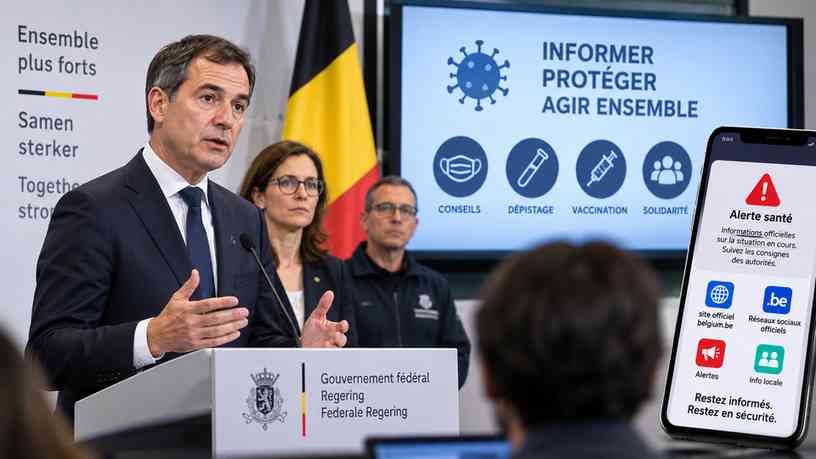
A sound response can fail if people do not receive trustworthy instructions. Belgium’s National Crisis Center manages BE-Alert, which can send emergency messages by SMS, email or voice call. Authorities may also send location-based alerts to people in a specific area, even if they are not registered.
The Crisis Center tests and develops the system, while municipalities and local services use websites, social media, radio, television and other channels to share local guidance. How BE-Alert and crisis communication work
For someone arriving from India, it is sensible to:
- Register for BE-Alert after settling in Belgium.
- Save the National Crisis Center website and follow your municipality’s official channels.
- Keep digital and paper copies of medical insurance, prescriptions and vaccination history.
- Use official Belgian health guidance rather than unverified social-media posts during an outbreak.
- Contact a doctor or pharmacist for individual medical advice, especially if pregnant, immunocompromised or managing a chronic condition.
What Belgium still needs to get right
Belgium has a robust framework, but preparedness depends on execution. The main challenges are maintaining enough healthcare workers, ensuring laboratories can scale rapidly, sharing data safely and consistently, and coordinating decisions across different levels of government.
There is also a delicate balance between early precaution and unnecessary disruption. A proportionate response needs transparent evidence, clear communication and public trust. The government’s use of structured risk assessments, colour-coded respiratory guidance, surveillance upgrades and cross-border EU coordination gives it a stronger base for the next outbreak—but no system can eliminate all uncertainty.
FAQ
What are the main gezondheidsrisico’s België is preparing for?
Belgium prepares for respiratory epidemics, new or unknown pathogens, zoonotic diseases, mosquito- and tick-related infections, antimicrobial resistance, heat-related health effects and other cross-border health threats.
Who decides outbreak measures in Belgium?
The Risk Assessment Group analyses scientific and epidemiological risk. The Risk Management Group decides on health-protection measures based on that advice. Major cross-sector emergencies can involve the National Crisis Center.
What do Belgium’s green, yellow, orange and red respiratory codes mean?
They indicate the level of respiratory-virus circulation and pressure on healthcare. The higher the code, the greater the concern about strain on care services and the stronger the recommended protective actions may become.
Can Indian nationals receive emergency alerts in Belgium?
Yes. Registering with BE-Alert is recommended after you have a Belgian address or local contact details. In some emergencies, authorities can also send location-based alerts to phones in an affected area.
Does Belgium monitor diseases beyond COVID-19 and flu?
Yes. Its surveillance and preparedness work includes respiratory viruses, notifiable infectious diseases, zoonoses, exotic mosquitoes, ticks, wastewater signals and antimicrobial resistance.
Is Belgium fully prepared for a future pandemic?
No country can be fully prepared for every unknown threat. Belgium has formal plans, surveillance systems and coordination structures, but official assessments also identify areas that still require improvement, such as laboratory surge capacity and medical-supply monitoring.