The Proces Jairon Turnhout: Welke Feiten Komen Tijdens het Proces Naar Boven? question centres on a deeply distressing Belgian criminal case involving the death of 14-year-old Jairon in Turnhout. The Assize Court proceedings began on 11 September 2026, more than four years after the teenager was found dead in the home where he lived with his father, siblings and other adults.
The central facts are stark: Jairon’s body was discovered on 25 February 2022, after he had reportedly been dead for roughly eight weeks. His death could not be conclusively explained through the initial post-mortem examination because of the advanced decomposition of his body. However, later hair analysis identified ketamine exposure, shifting the case from an alleged failure to provide care to a murder trial.
Six adults, including Jairon’s father, are now accused of murder. They have not been convicted, and the jury must assess the evidence, competing expert views and each defendant’s individual responsibility before reaching a verdict.
What is the Jairon Turnhout case about?

Jairon was 14 when he died in a rented house in Turnhout, in Belgium’s Antwerp province. According to reporting on the case, he lived there with his father, his brothers, five other adults and several children.
Police entered the home on 25 February 2022 after Jairon’s mother and her partner raised concerns. She had reportedly been unable to contact her son for weeks and was repeatedly given explanations for his absence. Jairon had also stopped attending school, which added to the alarm.
Inside the house, officers found Jairon’s body in a bedroom. Investigators concluded that he had died in early January 2022. The fact that his body remained undiscovered for so long, despite several people living in the property, became one of the case’s most troubling aspects.
The facts emerging at the opening of the trial
The first stage of the Jairon trial has highlighted both the established evidence and the major gaps the court must resolve.
| Issue | What has emerged publicly | Why it matters |
|---|---|---|
| Discovery of the body | Jairon was found on 25 February 2022, reportedly around eight weeks after his death. | Establishes the prolonged lack of medical intervention or notification. |
| Cause of death | The original forensic examination could not determine a precise cause because of decomposition. | The prosecution cannot rely on a conventional post-mortem conclusion alone. |
| Ketamine evidence | Later analysis of a hair sample identified a large amount of ketamine exposure. | It is the key evidence behind the murder charge and Assize Court referral. |
| Care and nutrition | Earlier judicial findings cited alleged isolation, lack of appropriate care and inadequate food. | These facts may support an allegation of deliberate neglect or a lesser offence. |
| Religious belief | The defence position has included the claim that people in the home prayed for Jairon’s recovery rather than seeking medical assistance. | It raises questions about intent, judgment and criminal responsibility. |
| Six defendants | Jairon’s father and five other adults face the murder accusation. | The jury must assess the conduct and knowledge of each person separately. |
Why ketamine is central to the Jairon proces Turnhout
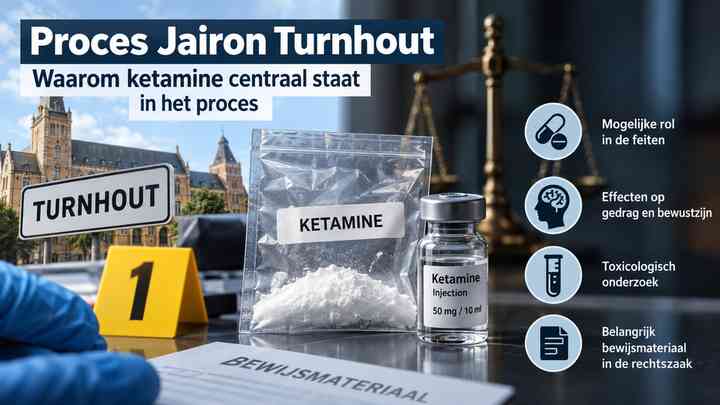
Ketamine is an anaesthetic medicine with sedative and dissociative effects. Its presence in Jairon’s hair became a pivotal development because a hair sample can indicate exposure over a period of time rather than only at a single moment.
Specialist analysis cited during the pre-trial stages indicated that Jairon may have been exposed to ketamine on more than one occasion. That finding was important enough for the Antwerp Chamber of Indictment to send the case to the Assize Court on a murder charge.
Yet the ketamine evidence does not, by itself, answer every question. The trial must examine:
- When the substance was administered or consumed.
- Who supplied or administered it.
- Whether the amount was medically fatal in Jairon’s circumstances.
- Whether it directly caused or contributed to his death.
- Whether any defendant knew about the substance.
The defence has previously challenged the weight that should be given to the hair analysis. Jairon’s father has denied giving ketamine to his son and has disputed knowledge of the drug. These are matters for the court and jury to test through expert testimony and cross-examination.
It is therefore inaccurate to state, at this stage, that ketamine conclusively proves murder. It is strong and highly relevant evidence, but not a final judicial finding.
The unanswered question of medical care
Another major focus is why no doctor, ambulance service or police authority was contacted when Jairon became seriously ill or died.
Reports before the trial described a highly religious household in which some residents believed prayer could bring Jairon back to life. Jairon’s father has acknowledged that he did not seek medical help and has reportedly said he has spent years questioning whether he should have gone to a doctor.
That admission is significant, but it does not automatically establish murder under Belgian law. The jury must distinguish between disastrous neglect, a failure to provide assistance, deliberate withholding of care, and intentional killing.
The prosecution’s position at the start of the proceedings has drawn particular attention. While the case was referred to the Assize Court on a murder accusation, reports from the opening indicated that the prosecution maintained a view closer to offences involving failure to provide care and failure to assist, rather than intentional murder. Jairon’s mother, appearing as a civil party, has argued that the evidence points to more than neglect.
This legal divide is likely to shape the entire trial.
Isolation from school, family and siblings

The court will also consider evidence that Jairon had become isolated before his death. He reportedly stopped going to school, and his mother said she had been unable to reach him for an extended period.
Earlier decisions in the case referred to Jairon being kept away from school and from his brothers. The precise circumstances, timing and responsibility for that isolation will matter. It may help the jury determine whether the adults in the house recognised a serious risk to his health and whether anyone intentionally prevented outside intervention.
The trial is not simply about what happened after Jairon died. It is also about his condition before his death: his access to food, healthcare, education, family contact and protection.
Why did the case move from neglect allegations to an Assize Court trial?
Initially, the six adults were expected to face a lower criminal court over allegations including failure to assist and deliberately withholding care from a vulnerable person. Jairon’s mother challenged that route and sought further examination of the evidence.
The additional hair-sample analysis changed the legal trajectory. The Chamber of Indictment concluded that the file contained sufficient grounds for a murder case to be heard by the Assize Court.
An Assize Court trial in Belgium is reserved for the most serious crimes and is decided by a jury. The six accused face a potential life sentence if convicted of murder. However, referral to trial is not proof of guilt; it means the evidence met the threshold for a jury to decide the allegation.
What the jury will need to decide

The jury’s task is more complex than determining whether mistakes were made. The factual record already suggests that Jairon did not receive timely medical attention and that his death was not reported for weeks. The harder legal questions concern causation, knowledge and intent.
The jury will need to weigh whether the evidence proves, beyond the required criminal standard, that one or more defendants intentionally caused Jairon’s death or knowingly participated in it.
Key questions include:
- Did ketamine contribute to Jairon’s death?
- If so, who administered it and with what intent?
- Was Jairon denied essential food, care or medical treatment?
- Did the adults in the house understand that he was in immediate danger?
- Did any person actively conceal his death or prevent others from seeking help?
- What responsibility does each of the six accused bear individually?
Because the cause of death could not be established by the original autopsy, expert evidence on toxicology, hair analysis and medical probability will be especially important.
What is confirmed, and what remains an allegation?
Clear reporting is crucial in a case involving a child’s death and an ongoing jury trial.
Confirmed publicly reported facts include Jairon’s discovery on 25 February 2022, the extended period between his death and discovery, the presence of other people in the house, the lack of a definitive initial cause of death, and the later identification of ketamine exposure in a hair sample.
Matters still to be determined by the court include who administered ketamine, whether it caused the death, whether murder occurred, and the guilt or innocence of each defendant.
The six defendants are entitled to the presumption of innocence until a final judgment is reached.
Frequently Asked Questions
When did the Jairon Turnhout trial begin?
The Assize Court trial involving Jairon’s death began on 11 September 2026 in Antwerp.
Who is on trial in the Jairon case?
Jairon’s father and five other adults who lived in the Turnhout house are standing trial. All six face a murder accusation.
Why is ketamine important in the trial?
A later hair analysis identified significant ketamine exposure. The finding was a major reason the case was sent to the Assize Court for a murder trial, though its exact role in the death remains contested.
Was Jairon’s exact cause of death established?
No. The original forensic examination could not establish a definitive cause of death because Jairon’s body was already in an advanced state of decomposition when police found it.
Did the defendants call medical services?
Public reporting indicates that no medical services were called when Jairon became seriously ill or after his death. The reasons, knowledge and intent behind that failure are central issues for the jury.
Has anyone been convicted in the Jairon proces Turnhout?
No. The trial is ongoing, and no defendant has been convicted. The jury must assess the evidence and deliver its verdict after the proceedings conclude.