A mosquito bite in Belgium is usually an irritating summer problem rather than a medical emergency. Yet mosquito protection deserves attention, particularly for Indian travellers, students and families spending time outdoors. Belgium’s authorities monitor the Asian tiger mosquito, which can transmit viruses such as dengue and chikungunya when the required transmission conditions exist.
The practical answer is simple: prevent bites, remove breeding water around your accommodation, and seek medical advice for fever or unusual symptoms—especially after recent travel from or to a region where mosquito-borne illnesses circulate.
What is the mosquito risk in Belgium?
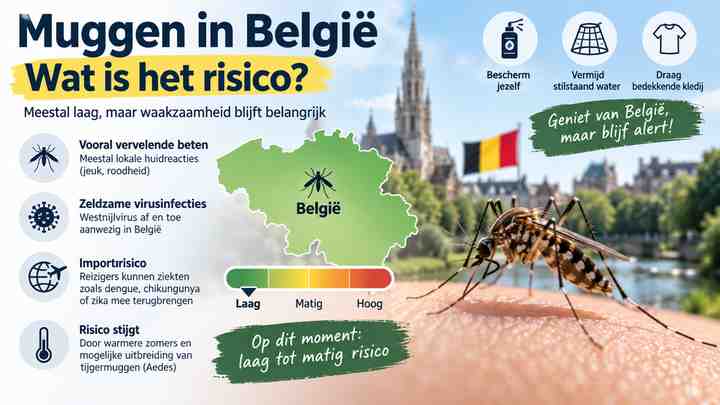
Belgium has common native mosquitoes, most active around dusk and at night. The Asian tiger mosquito (Aedes albopictus) has also been detected in multiple Belgian municipalities, including areas of Flanders, Wallonia and Brussels. It is recognisable by its black body and white stripes and is more likely to bite during the day, particularly in the morning and late afternoon.
Its presence does not mean every bite carries a virus. For local transmission of dengue, chikungunya or Zika to occur, several things must happen: an infected traveller must be carrying the virus in their blood, a capable mosquito must bite that person, and it must then bite another person. Belgian public-health bodies monitor these risks and encourage residents to report suspected tiger mosquitoes.
For most visitors from India, the key point is balanced caution: do not panic about ordinary bites, but use reliable protection consistently. This is especially sensible if you have recently travelled from a dengue-affected area or live near gardens, balconies, rain barrels or other places where water can collect.
The most effective muggenbescherming België routine
A good routine combines repellent, clothing, indoor barriers and source reduction. No single measure is perfect on its own.
| Situation | Best protection |
|---|---|
| Walking, cycling or dining outdoors | Apply repellent to exposed skin; wear long, loose clothing |
| Evening in a garden or terrace | Use repellent, cover ankles and lower legs, remove standing water nearby |
| Sleeping with open windows | Fit window screens or use a mosquito net |
| Apartment balcony or garden | Empty containers that collect rainwater |
| Daytime exposure in tiger-mosquito areas | Do not rely only on evening protection; use repellent during the day too |
Choose an evidence-based mosquito repellent
Look for a product with a recognised active ingredient and follow the label exactly. Belgian mosquito-surveillance guidance identifies these commonly used options:
- DEET: Products containing at least 20% DEET are recommended for effective protection. Stronger concentrations generally provide longer protection; concentrations above 50% should not be applied directly to skin.
- Icaridin or picaridin: Choose a product with at least 20%.
- IR3535: Adults should look for a concentration of at least 30%.
- Citriodiol: Products containing roughly 20–25% can be an option.
For a short city break in Brussels, Antwerp or Ghent, a standard repellent and sensible clothing are usually adequate. For camping, rural stays, lakeside visits or extended outdoor work, take protection more seriously and reapply as directed.
If using sunscreen, apply sunscreen first and allow it to settle for at least 20 minutes before applying repellent. Never spray repellent into your face; spray it on your hands first, then apply carefully. Use child-specific directions on the product label, and keep repellent away from children’s hands, eyes, mouth, irritated skin and cuts.
Cover skin without making summer uncomfortable
Mosquitoes can bite through thin or tight fabric. Choose loose, lightweight long sleeves, full-length trousers and closed shoes or socks when bites are likely. Light-coloured clothing is useful because it absorbs less heat and makes mosquitoes easier to spot.
This approach is particularly useful for families visiting Belgium in late spring and summer, when evenings can still feel cool enough for a thin overshirt or light jacket.
Make your room and outdoor space less mosquito-friendly
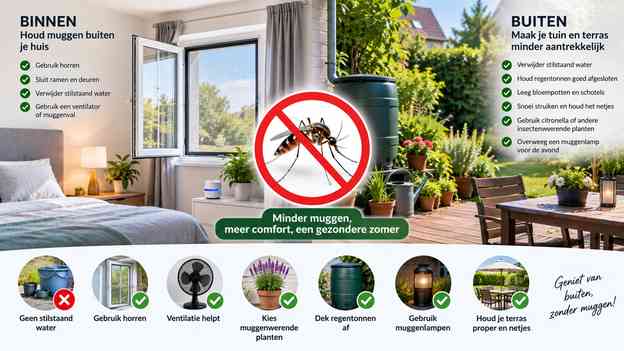
Mosquito protection is not just something you put on your skin. The most effective long-term step is to deny mosquitoes a place to breed.
Remove stagnant water
Tiger mosquitoes can breed in small, artificial water containers. Check balconies, gardens and shared outdoor areas for:
- Plant-pot saucers
- Buckets and watering cans
- Children’s toys left outside
- Uncovered rain barrels
- Blocked gutters
- Empty bottles, trays and containers
- Pet-water bowls
Empty or turn over containers that are not in use. Cover rain barrels with fine mosquito netting. Change pet-bowl water regularly and scrub the sides to remove possible eggs. If a water source cannot be removed, ask the property owner or local authority about appropriate management rather than experimenting with chemicals.
Improve indoor protection
Window and door screens are among the easiest ways to reduce bites. A fan can make it harder for mosquitoes to fly close to you, while air conditioning may reduce bites but should not be treated as complete protection.
If your accommodation lacks screens—such as a budget hostel room, countryside rental or camping setup—sleep under a well-fitted mosquito net. An insecticide-treated net offers added protection where it is appropriate and available.
How to recognise a tiger mosquito in Belgium
The Asian tiger mosquito is smaller than many common mosquitoes and has a distinctive black-and-white striped appearance. It is often active in daylight, unlike many familiar local mosquitoes that are more troublesome at dusk or during the night.
A photo is more useful than trying to catch the insect. If you believe you have seen a tiger mosquito, report it through Belgium’s MosquitoSurveillance platform or its French and Dutch mobile applications. Citizen reports help public-health teams track where the species is appearing and target control efforts.
Do not assume every striped insect is a tiger mosquito, and do not use unnecessary insecticides indoors or in public spaces simply because you saw a mosquito.
Can mosquito bites in Belgium cause dengue or other viruses?
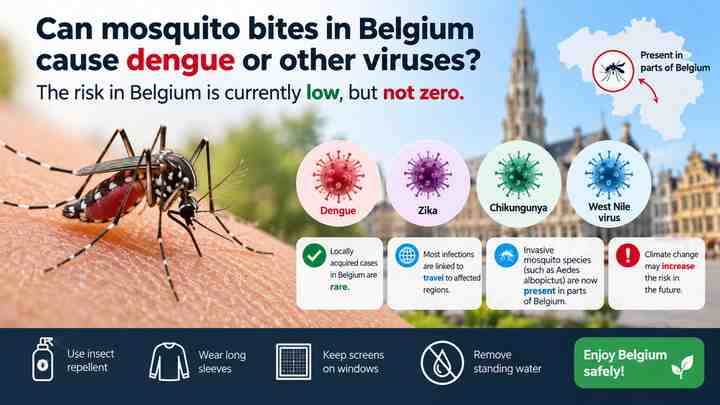
Belgium’s health authorities monitor mosquito-borne diseases including dengue, chikungunya, Zika, West Nile fever and Usutu virus. The Asian tiger mosquito is relevant because it can carry dengue and chikungunya viruses in suitable circumstances.
However, a mosquito must first acquire a virus by biting an infected host. A bite itself is not proof of infection. Most bites cause only a local reaction: itching, redness and a raised bump caused by the body’s response to mosquito saliva.
For Indian travellers, this distinction is important. Dengue is familiar in many parts of India, but a trip to Belgium does not create the same everyday exposure risk as living in a dengue-endemic setting. Still, bite prevention matters because mosquito populations and disease patterns can change, and people who are unwell after travel should tell a clinician about their full itinerary.
What to do after a mosquito bite
Wash the area with soap and water. A cold pack for around 10 minutes can ease itch and swelling. Avoid scratching, as broken skin can become infected. An over-the-counter anti-itch treatment may help; ask a pharmacist if you are unsure which option is suitable for you or a child.
Seek medical advice if the bite becomes increasingly red, warm, painful, develops a spreading red streak, or is accompanied by significant swelling, hives or fever.
When fever needs urgent medical attention
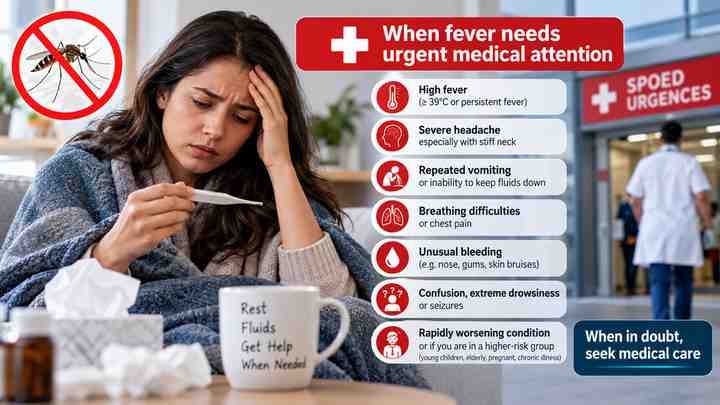
Contact a healthcare professional promptly if fever develops alongside headache, rash, nausea, vomiting, marked muscle or joint pain, or unusual bleeding—particularly if you have recently travelled internationally.
Tell the clinician:
- Your recent travel destinations and dates
- When symptoms began
- Whether you recall mosquito bites
- Any medicines you have taken
- Pregnancy, immune conditions or significant medical history
Do not self-diagnose dengue from a bite alone. If dengue is suspected, paracetamol is generally used for fever and pain under medical guidance; aspirin and anti-inflammatory medicines such as ibuprofen should be avoided until a clinician has ruled out dengue because they may increase bleeding risk.
Go for urgent care immediately for severe abdominal pain, persistent vomiting, bleeding from the nose or gums, blood in vomit or stool, breathing difficulty, unusual restlessness or severe weakness.
Practical packing list for Indian visitors to Belgium
For travel between May and early autumn, pack a small mosquito-protection kit alongside your regular medicines:
- Repellent with DEET, picaridin/icaridin, IR3535 or citriodiol
- Lightweight long-sleeved top and full-length trousers
- Socks for evening outdoor plans
- A compact mosquito net if your accommodation is basic or you are camping
- Simple anti-itch treatment
- Paracetamol, if it is suitable for you
- Travel insurance details and a note of any allergies or prescription medicines
If you are pregnant, travelling with an infant, have a weakened immune system, or are planning extended travel across several countries, seek tailored medical advice before departure.
FAQ
Are mosquitoes common in Belgium?
Yes. Common mosquitoes can be noticeable during warmer months, particularly near gardens, water, vegetation and open windows. Their activity often increases around dusk and at night.
Is the tiger mosquito established in Belgium?
Tiger mosquitoes have been detected in several Belgian municipalities, and surveillance has found evidence that they can overwinter in some locations. Their spread is actively monitored.
Do I need malaria tablets for a trip to Belgium?
Belgium is not a malaria destination. Do not take malaria medication for Belgium unless a qualified clinician has prescribed it for another part of your itinerary.
What repellent is best for Belgium?
Use a properly labelled product containing an evidence-based active ingredient. DEET at 20% or more, picaridin/icaridin at 20% or more, IR3535 at 30% or more, or citriodiol at 20–25% are practical options.
Can a mosquito bite cause dengue in Belgium?
It is possible only if a mosquito has first become infected after biting a person carrying the virus. A routine bite is not evidence of dengue, but fever or other concerning symptoms after travel should be assessed by a clinician.
Should I report a suspected tiger mosquito?
Yes. Take a clear photo and submit it through Belgium’s official MosquitoSurveillance service. Reports help authorities monitor the insect’s spread and reduce future risk.
The sensible approach to muggenbescherming België is prevention without alarm: use a reliable repellent, cover exposed skin when needed, clear standing water, protect sleeping spaces and take fever seriously after travel.